
Enrolling in this school simply opens doors—it doesn’t close any. Those who are hesitant should come; if the research-oriented curriculum doesn’t suit them, there’s always the option to broaden their education to pursue goals that may differ from those of research—such as teaching, medicine (human and veterinary), or even entrepreneurship. It’s an experience worth having.
Portrait
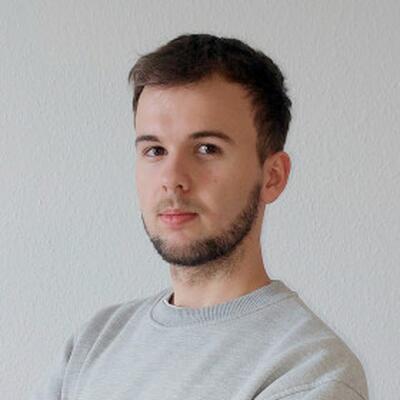
Théo SARRAZIN is a student in the Department of Teaching and Research (DER) in Biology at ENS Paris-Saclay. He placed second in the 2024 Agrégation exam in Biochemistry and Biological Engineering (BGB).
What is your educational background?
I earned my high school diploma in Science and Laboratory Technology (STL) with a concentration in Biotechnology at the Val de Garonne General and Technological High School in Marmande. During my high school years, I developed a strong interest in biology, particularly in the fields of biochemistry and microbiology.
Afterward, I enrolled in the TB (Technology-Biology) preparatory class in Toulouse, which allowed me to confirm my interest in biology and deepen my knowledge in various scientific subjects.
After these two years of preparatory study, I was admitted through a competitive entrance exam to the first year of the Department of Teaching and Research (DER) in Biology at ENS Paris-Saclay. This year focused on consolidating foundational knowledge across most areas of biology.
In my second year, I then enrolled in the Master’s 1 in Biology and Health program at Paris-Saclay University, many of whose course units are taught by the DER in Biology. This path allowed me to acquire knowledge in various fields of biology in preparation for the Master 2 (M2FESup) program, which prepares students for the Biochemistry and Biological Engineering (BGB) agrégation exam.
Did you know from the start what you wanted to do when you entered ENS Paris-Saclay?
Yes and no. My career plans fluctuated a great deal during my three years at ENS Paris-Saclay. In my first year, I enrolled at ENS Paris-Saclay with the goal of becoming a researcher in immunology or microbiology, completely ruling out teaching. In my second year, I finally realized that I would enjoy teaching much more than research, so I decided to become a teacher.
Why did you choose a master’s program in higher education training (FESUP)?
During my second year at ENS Paris-Saclay, I discovered a passion for teaching, particularly through tutoring. In fact, I was able to serve as a biology tutor at the Institut Villebon-George Charpak, working with first-year undergraduate students. This experience of sharing and passing on my knowledge and my passion for biology reinforced my decision to become a teacher. Consequently, I decided to enroll in the M2FESup program within the DER in Biology, specializing in the BGB agrégation track.
What does Biochemistry and Biological Engineering (BGB) entail?
“Biochemistry and Biological Engineering” (BGB) is divided into three main areas: biochemistry, cell biology/physiology, and microbiology.
In each of these three areas, we study the biological mechanisms associated with living organisms, ranging from the molecular—and sometimes atomic—scale to the scale of the living organism. We study and learn all the fundamental knowledge—including the most recent findings—necessary to understand living organisms. Studying BGB also requires, first and foremost, an experimental approach, particularly through the study of major historical discoveries, the experimental and practical demonstration of knowledge, current research methods, and the application of this knowledge in the field of biotechnology.
BGB is also complemented by fundamental knowledge of chemistry (organic and inorganic), particularly for understanding the numerous chemical and molecular phenomena that are fundamental to biology.
What are your plans for the future?
To complete my studies at ENS Paris-Saclay, I will pursue a Master 2 in Research in Microbiology next year in order to specialize in this field. Following that, I plan to write a dissertation in the same field. Having earned the BGB certification will allow me, upon completing my dissertation, to choose between a career as a researcher, a teacher, or a teacher-researcher.
Can you tell us what the School offers you?
Being at ENS Paris-Saclay is an immense privilege for me. The training offered by the DER in Biology largely meets my expectations and allows me to develop a high degree of scientific rigor as well as a wealth of knowledge. Being at ENS Paris-Saclay also means having many doors open to me, such as numerous training opportunities and prospects for the future. I don’t think I would have had as many choices or as much control over my future if I hadn’t enrolled in this school.
What would you like to say to students who are hesitant about coming to ENS Paris-Saclay?
Enrolling in this school only opens doors—it doesn’t close any. Those who are hesitating should come; if the research-focused curriculum doesn’t suit them, there’s always the option to diversify their studies to pursue goals that may differ from those in research—such as teaching, medicine (human and veterinary), or entrepreneurship. It’s an experience worth having.